How Caregiving Helps SLP Students Build Confidence Supporting Children With Speech Delays

How Caregiving Helps SLP Students Build Confidence Supporting Children With Speech Delays
For Speech-Language Pathology (SLP) students, real-world experience plays a major role in understanding how communication differences appear in everyday routines. While coursework builds theoretical knowledge, caregiving roles offer supportive, human-centered experiences that help students explore communication delays in natural environments.
Many students interested in caregiver jobs for children with speech delays or roles working with children with communication disorders find that these opportunities help them:
- Practice communication strategies informally
- Build empathy, patience, and adaptability
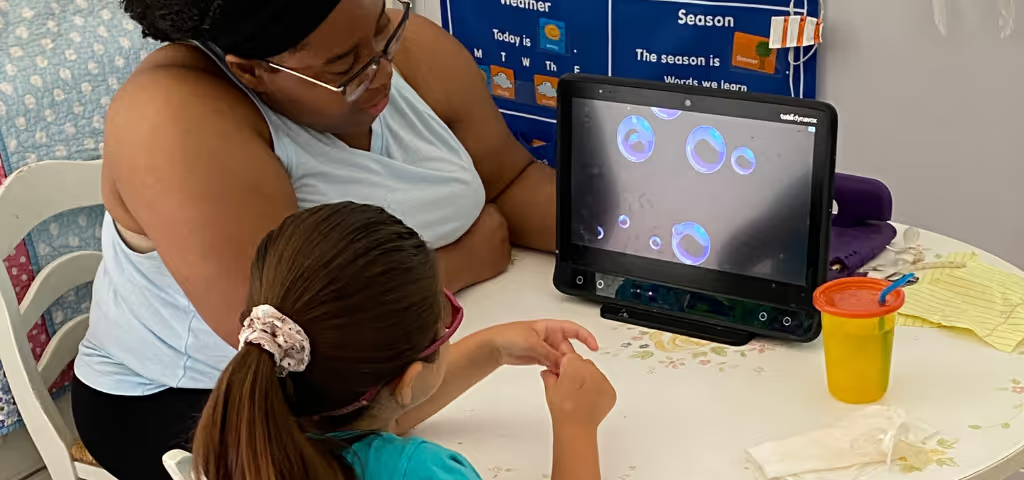
- Gain early exposure to AAC systems
- Understand the day-to-day lives of children who communicate differently
“I learned quickly that communication isn’t just speech — it’s gestures, shared looks, patterns, and persistence. Caregiving helped me pay attention in a way no class ever could.”
Why Real-World Experience Matters for SLP Students
Beyond the Classroom and Lab
SLP programs offer structured learning, but real-life communication is dynamic and full of surprises. Working as a nanny, caregiver, or support aide introduces students to:
- Behavioral and emotional dynamics
- Everyday communication barriers
- Adaptable problem-solving
- Family-centered communication
These experiences create a smoother transition into graduate-level clinical placements, where confidence and flexibility are essential.
How Caregiving Builds Confidence with Speech Delays
Low-Pressure Exposure to Communication Differences
Caregiving roles allow students to observe how speech delays influence:
- Play and social interactions
- Emotional regulation
- Daily routines and transitions
This is not therapy—it is observation and relationship-building in everyday settings.
Natural Opportunities for Language Modeling
In play, routines, or activities, SLP students often find natural moments to model communication by:
- Using gestures or visuals
- Repeating key words
- Responding to communication attempts warmly
Growth in Soft Skills SLP Programs Value
Caregiving develops skills that graduate programs consistently highlight:
- Empathy and attuned listening
- Flexibility during unexpected moments
- Cultural and linguistic sensitivity
- Patience when communication unfolds slowly
“Supporting a child with speech delays taught me to slow down, listen closely, and celebrate every attempt to communicate. That experience gave me confidence heading into my SLP program.”
AAC Exposure Helps SLP Students Grow as Communication Partners
Augmentative and Alternative Communication (AAC) refers to tools and strategies that support or replace spoken communication. According to ASHA, AAC includes both low-tech supports (such as picture boards) and high-tech communication devices that help individuals express themselves across multiple contexts. ASHA also emphasizes that people often communicate across multiple modalities at the same time—spoken words, gestures, symbols, and device-based communication.
“Before caregiving, AAC felt intimidating. But seeing how kids use visuals or devices in daily routines made everything click. It showed me how AAC is about access, not perfection.”
What AAC Exposure Looks Like in Everyday Caregiving
Students may interact with systems such as:
- Unaided AAC: gestures, facial expressions, sign language
- Aided Low-Tech AAC: picture cards, communication notebooks
- Mid-Tech AAC: single-message buttons, recorded-speech devices
- High-Tech AAC: speech-generating devices and communication apps
Caregiving experiences allow students to observe:
- How children navigate symbols
- Motor planning needed to access icons or pages
- How AAC supports autonomy, choices, and emotional expression
ASHA identifies caregivers and family members as essential communication partners who help children use AAC across daily routines. These natural interactions often give students their first exposure to what collaborative communication looks like.
“Everyone has the right to communicate. AAC lets kids say what they want, when they want, to whoever they want, whether that’s asking for help, making a joke, or saying ‘I love you.’” - Elaine Keuning, AAC specialist
Types of Caregiving Jobs That Support SLP Student Growth
Many caregiving roles offer meaningful communication experience, especially those involving:
- Children with speech or language delays
- AAC users or emerging communicators
- Collaboration with families, educators, or related-service providers
These roles help students explore what working with children with communication needs looks like outside a clinical setting.
Finding Flexible Caregiving Jobs as an SLP Student
Marketplace platforms like Truly Care allow families and independent caregivers to connect directly. Students often highlight their interests by:
- Adding “SLP student interested in supporting communication and language development” to their profiles
- Searching for after-school, weekend, or part-time roles
- Sharing any AAC or communication support experience in their bios
These roles often align well with academic schedules while providing purpose-driven, skill-building opportunities.
Balancing Caregiving With SLP School
Students commonly use strategies such as:
- Using a digital calendar to organize shifts, classes, and assignments
- Communicating availability openly with families
- Prioritizing rest and emotional well-being
- Setting boundaries during busy academic periods
“You can’t learn patience from a textbook. You learn it by showing up, being consistent, and understanding that communication takes many forms.”
Key Takeaways
- Caregiving offers practical experience with diverse communication styles
- AAC exposure builds confidence for graduate school and future placements
- Soft skills such as empathy, adaptability, and active listening grow naturally
- Flexible caregiving roles offer purpose, insight, and daily learning opportunities
- Marketplace platforms like Truly Care help families and independent caregivers connect based on shared needs and interests
About Truly Care
Truly Care is a marketplace platform that connects families seeking caregivers with independent care providers. We are not a home health agency and do not employ caregivers. Families and caregivers set their own terms of engagement, including schedules, compensation, and job responsibilities. Families are responsible for their own hiring decisions and compliance with applicable employment and tax laws.
Related Articles

Make your next job your best job.
Get Started →