How Weekend Caregiving Helps PT Students Build Confidence Supporting Children With Disabilities

How Weekend Caregiving Helps PT Students Build Confidence Supporting Children With Disabilities
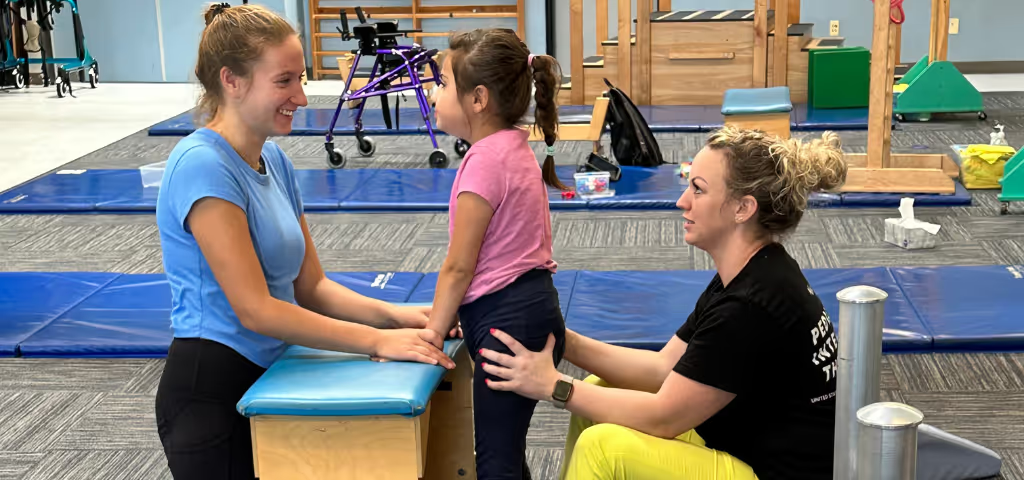
For many Physical Therapy (PT) students, early real-world experience can illuminate how mobility and movement differences appear in everyday life. While coursework provides foundational theory, caregiving roles offer human-centered, supportive exposure to children with disabilities in familiar environments.
These opportunities often help students interested in caregiver jobs for children with disabilities learn to:
- Support mobility safely and respectfully
- Strengthen communication and problem-solving skills
- Observe coordination and motor planning challenges
- Build empathy and adaptability in natural settings
Why Early Real-World Experience Matters for PT Students
Beyond Classroom and Lab Learning
Many PT programs introduce hands-on clinical rotations later in the curriculum. Early caregiving roles can help bridge the gap between theory and everyday practice by offering exposure to:
- Real-world mobility support
- Behavioral and emotional communication
- Family routines and accessibility needs
- Day-to-day problem solving
The American Physical Therapy Association (APTA) identifies communication, compassion, and cultural competence as core values for physical therapists. Early real-world experiences, such as caregiving, often give PT students natural opportunities to practice these values in everyday routines.
“Caregiving taught me how to communicate with patience and purpose — something no textbook could teach.”
What PT Students Learn Through Weekend Caregiving
Hands-On Mobility and Movement Support
Weekend caregiving roles allow students to observe and assist with:
- Safe mobility and transfers based on family guidance
- Motor planning during daily routines such as dressing, bathing, and feeding
- Coordination challenges that appear in play and transitions
- Responses to fatigue, discomfort, or overstimulation
This support is not clinical therapy — it is about being present, helpful, and attentive in everyday settings.
Soft Skills PT Programs Consistently Prioritize
Caregiving helps PT students naturally strengthen:
- Trust-building with families
- Attuned listening and observation
- Encouragement during challenging moments
- Awareness of nonverbal cues
- Adaptability when routines shift
Studies published in journals such as BMC Medical Education suggest that early experiential learning can support the development of empathy, communication, and comfort working with diverse populations. Many PT students find that caregiving offers similar benefits in everyday, low-pressure environments.
“Every interaction becomes real-time feedback you won’t get from textbooks or labs.”
How Caregiving Prepares PT Students for Pediatric Settings
Seeing the ‘Whole Child’ Outside a Clinic
In clinical environments, students may only see a child for short, structured sessions. In the home, you gain insight into:
- How families use durable medical equipment
- How mobility devices support daily routines
- Real accessibility needs in home spaces
- Creative adaptations families make to support independence
A Real-World Example: Enya’s Story
Enya, an early-career occupational therapist preparing to pursue PT school, worked as a caregiver for two children who used the Trexo, a robotic gait trainer designed to help children practice stepping movements with dynamic support. It was a rare opportunity to see emerging mobility technology used in daily life.
The experience reshaped her understanding of movement support and influenced her decision to pursue physical therapy.
“Seeing mobility technology used in everyday routines changed the way I understood pediatric care.”
Where PT Students Can Find Flexible Caregiving Roles
Look for Roles That Involve:
- Supporting mobility or daily living activities
- Working with children with physical or developmental disabilities
- Flexible weekend or evening schedules
- Collaboration with families on movement-based routines
Marketplace platforms such as Truly Care allow families and independent caregivers to connect directly based on shared needs and availability.
Tips for PT Students to Stand Out
Consider including in your profile:
- “PT student interested in supporting mobility and daily routines”
- Any experience with adaptive equipment
- Strengths like communication, patience, and adaptability
Balancing PT School With Weekend Caregiving
Practical Ways to Make It Work
Many PT students use supports such as:
- Digital calendars to organize shifts
- Communicating availability early with families
- Prioritizing physical and emotional rest
- Setting boundaries during exam-heavy weeks
Hands-on caregiving can be physically and emotionally engaging, but many students report that it also provides clarity, confidence, and motivation during PT school.
Key Takeaways
- Weekend caregiving provides real-world mobility and communication support experience.
- PT students gain early confidence supporting children with disabilities.
- These roles help students strengthen soft skills essential for clinical placements.
- Marketplace platforms like Truly Care help families and independent caregivers connect directly.
Make your next job your best job.
Get Started →