Introducing the State of Complex Care
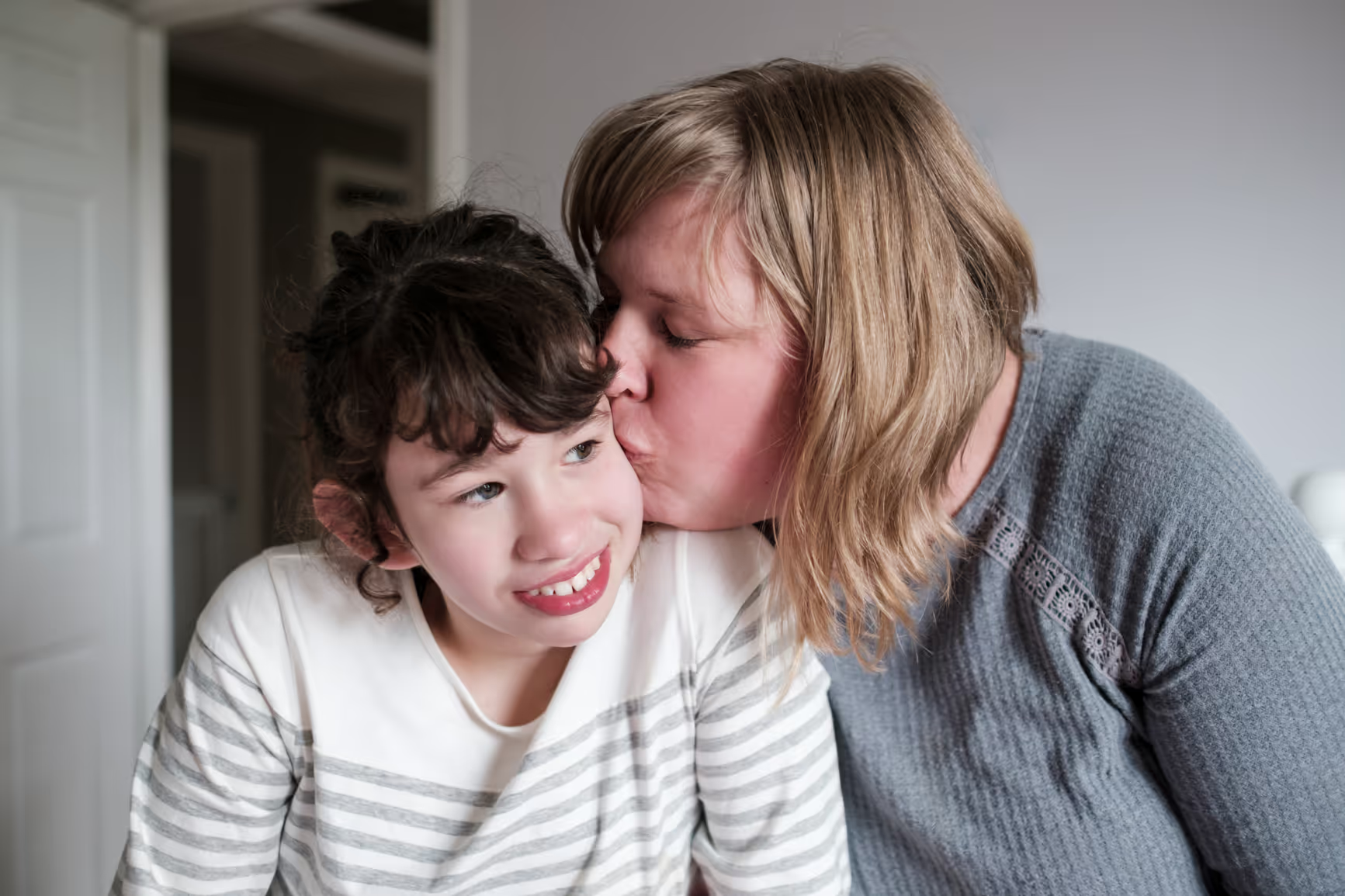

What began as a simple question quickly became something much bigger.
When we first started our work on Truly Care, we had some key questions on what we wanted to build. The four of us who founded Truly Care come from data and technology backgrounds, and that influences how we work. When we’re unsure about something, we start by looking at the data and seeing what it actually shows. We use it to check our assumptions, understand where we might be wrong, and decide what questions to ask next.
We took this same approach to our initial questions about what we were building at Truly Care. So we decided to run a 1 or 2 small focus group. This was May of 2025 and our goal was to speak to five to 10 families navigating complex care needs, just enough to sanity-check what we thought we were hearing.
Within two days of starting to look for families to join our focus group, 586 people signed up.
That response stopped us in our tracks. We ran 3 focus groups and the depth and intensity of what people shared convinced us that we should listen to even more stories, so we conducted a survey.
I’ve conducted more surveys that I can count over the course of my career and there are always too things I can count on: it’s more difficult than you think to get survey respondents and they fatigue – they don’t make it to the end or their responses get shorter, less detailed. But with this survey, we were blown away.
486 families completed our survey. They didn’t just complete a survey, they shared moving stories of daily struggle, resilience, and the quiet exhaustion of trying to hold everything together without adequate support. Many described navigating care systems that were fragmented, hard to access, or simply not built for the realities they live with every day.
As we listened, one thing became clear. This was not about occasional help or routine caregiving. Families were describing something more intensive, more constant, and more defining.
We didn’t yet have a shared name for it. So we listened more closely.
As we listened, one thing became clear. This was not about occasional help or routine caregiving. Families were describing something more intensive, more constant, and more defining.
Naming What Families Are Living: Complex Care
The families we heard from are supporting individuals who require more than typical assistance. Their responsibilities often include daily support across multiple activities, ongoing supervision, or navigating developmental or other conditions that differ from the ordinary.
We refer to this as Complex Care.
Not as a label, but as a way to give language to what families have been doing all along: care that is unrelenting. Care that reshapes careers, health, finances, and family dynamics. Care that rarely pauses.
Until recently, there has been little shared framework to describe the scope of this experience. Without language, it is easier for systems, policies, and products to overlook it.
The families who participated in this research made it impossible to ignore.
What the Data Reveals About Unmet Care Needs
The numbers told us a sobering story.
Based on responses from these 486 families across the United States, we found that:
- 74% have missed important medical appointments because they lacked adequate support
- 69% have reduced work hours, left jobs, or turned down opportunities due to caregiving responsibilities
- 57% have sought medical care themselves for stress-related, physical, or mental health impacts tied to caregiving
These are not edge cases. They reflect a systemic gap between what families need and what is currently available to them.
The Human Cost Behind the Numbers
Behind every data point there was a person making difficult tradeoffs.
- A parent stepping away from a career to stabilize care at home.
- A sibling postponing their own medical treatment to cover a caregiving shift.
- Someone pushing through exhaustion because there was no one else to help.
Families spoke to us about isolation, burnout, and the constant fear of what happens if they got sick or something went wrong. They told us about how they felt invisible within systems that were never designed for long-term, high-intensity care needs.
The numbers gave us the evidence and direction, but their stories gave us the urgency.
Where we go from here
The State of Complex Care exists to document what families told us, in their own words and on their own terms. We’ll continue to dive into the data in numbers over the next year to share more about:
- The most common barriers families face when trying to find support
- Where current systems break down for Complex Care households
- What families say would make the most meaningful difference in their daily lives
Most importantly, this work is meant to inform how we move forward. What we learn here will shape the decisions we make and the problems we choose to solve.
An Ongoing Conversation, Not a Final Word
This report is not meant to be definitive.
It reflects the voices of hundreds of families, but it cannot capture every experience. We know there are gaps. We know there are perspectives we haven’t yet heard.
That’s why this series is also an invitation.
If you are living this reality and want to share more about your experience or what we should look into next, we encourage you to share more. Families can always reach us at community@truly.care.
Complex Care deserves to be seen, named, and understood. This is where that work begins.
Key Takeaways
- Complex Care describes the sustained, intensive support many families provide without adequate systems in place
- Data from 486 families shows widespread unmet needs affecting health, work, and well-being
- Behind every statistic is a human story of resilience and sacrifice
- The State of Complex Care is a starting point for deeper understanding and better solutions
- Ongoing input from families is essential to ensuring this work reflects real lived experiences
Fewer than 3 in 10 families say their current care setup fully meets their needs
Make your next job your best job.
Get Started →